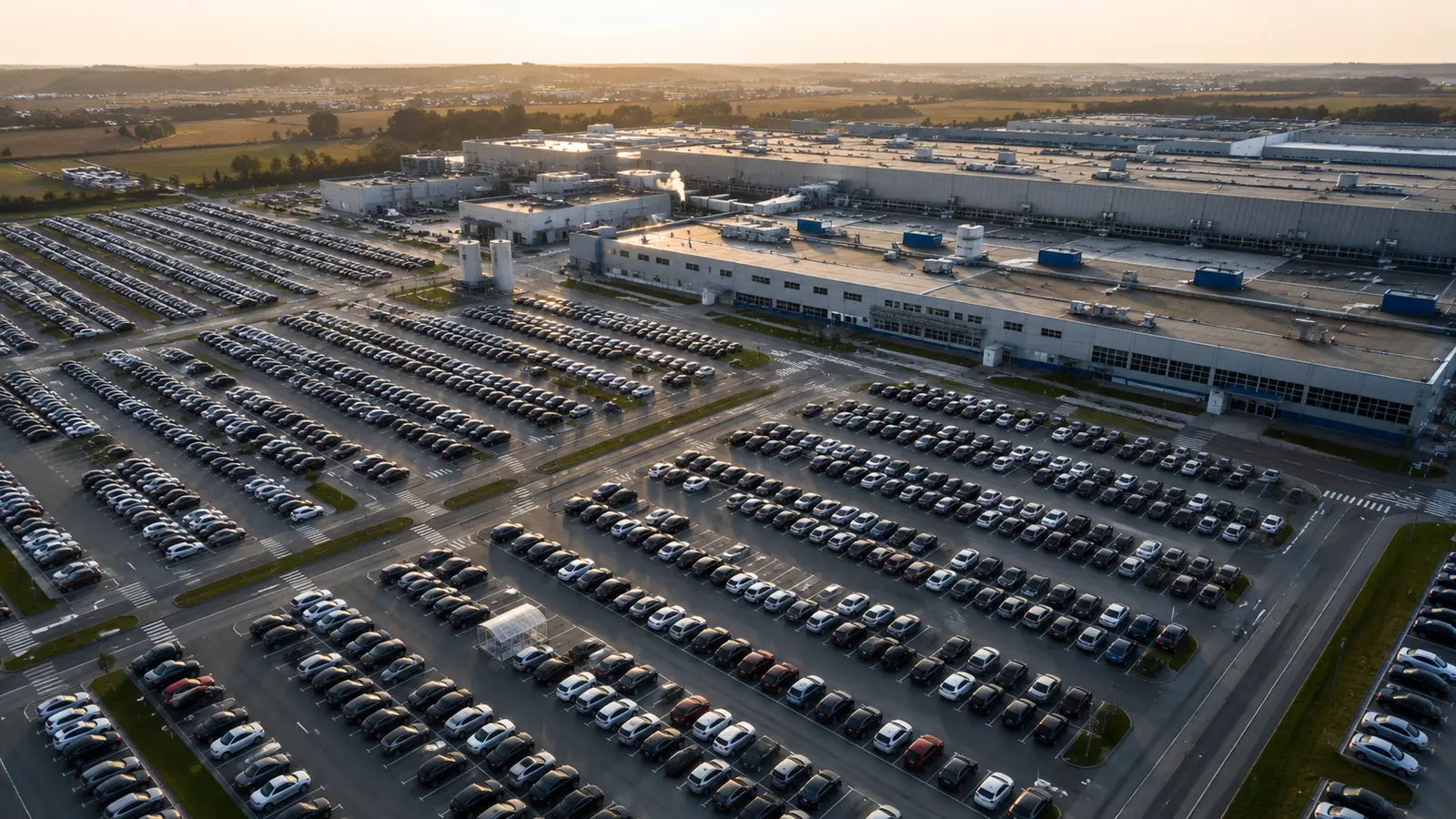
In manufacturing companies, employee transport has long remained one of the greatest organizational challenges.
Plants are often located outside city centers, employees live in many surrounding towns, and public transport does not always match shift hours.
At the same time, the labor market forces companies to look for candidates further and further from their locations.
As a result, transport availability begins to affect not only the daily functioning of the plant, but also recruitment, retention, and the employer's competitiveness.
The problem most manufacturing plants face
In many manufacturing companies, hundreds or thousands of employees commute to the same workplace every day.
Some use employee buses, but not all towns can be covered by collective transport. Not every route is economically justified either.
On the other hand, every day dozens or hundreds of cars arrive at the plant's parking lot with a single driver.
This is precisely the potential that shared commute programs utilize.
Carpooling as a complement to employee transport
Contrary to popular belief, carpooling is not a competitor to employee buses.
It works best as their complement.
Buses serve main directions and the largest clusters of employees, while shared rides help people living off the main routes or in towns not reached by the employer's organized transport.
This allows the company to increase transport accessibility without having to launch additional bus lines.
How does the shared commute program work in inOneCar?
The employer launches its own shared commute program for employees.
Employees join the program via the inOneCar app and add their rides related to commuting to work.
The system helps them find coworkers traveling in a similar direction, so they can organize shared rides and split commute costs.
Everything happens within the employee community of the given company.
What do the statistics show?
Experience shows that employees are more willing to engage in programs that bring them tangible benefits.
That is why more and more manufacturing companies are combining shared commutes with a benefits system.
The employee not only saves on fuel costs, but can also receive additional rewards for activity in the program.
Shared commutes as an employee benefit
In inOneCar, companies can create their own motivational programs supporting shared rides.
Employees earn points for activity in the program, and then exchange them for benefits prepared by the employer.
The organization can also introduce subsidies for shared rides, through which program participants receive additional financial support related to commuting to work.
Such a solution allows combining employee transport with the company's benefits policy.
Benefits for HR departments
For HR departments, a shared commute program primarily means the ability to support employees without having to organize additional bus routes.
It can also support recruitment activities by increasing the transport accessibility of the plant for candidates living far from the workplace.
Importantly, the program is voluntary and relies on the activity of the employees themselves, so it does not require daily coordination of rides by the HR department.
Summary
In manufacturing companies, the transport problem does not end at the parking lot and employee buses.
Solutions that help employees get to work more easily and cheaply are becoming increasingly important.
That is why shared commute programs are becoming a natural complement to employee transport. Especially when combined with benefits, points, and ride subsidies.
For employees, this means real savings. For the employer, a modern benefit and an additional tool supporting recruitment and building engagement in the organization.