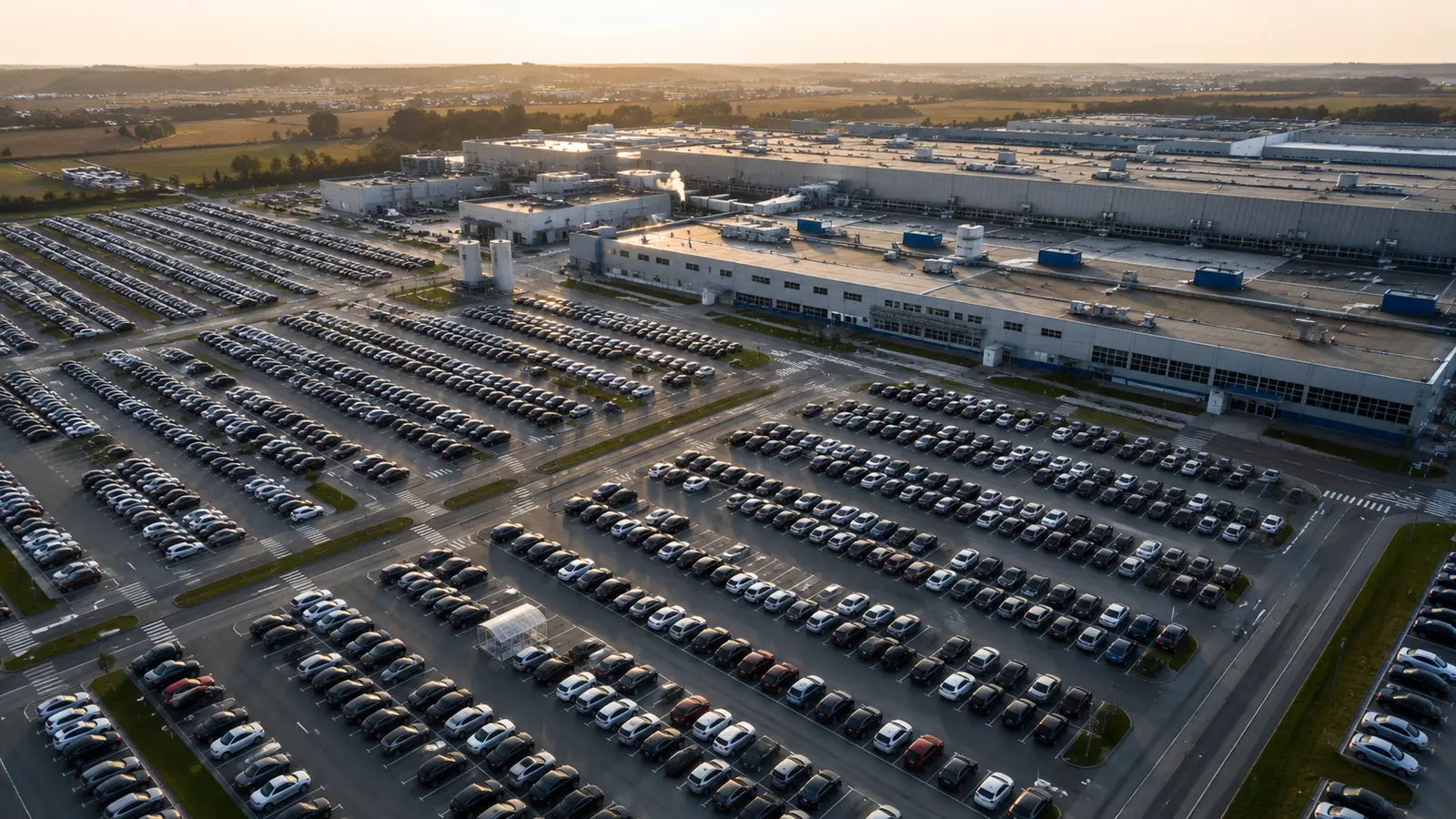
A few years ago, organizing employee transport was for many companies primarily an add-on, a benefit, or a way to widen the candidate pool from surrounding areas. Today it is increasingly becoming one of the key operational challenges.
The reason is simple: the labor market has changed. Employees live further from facilities, work shifts, change jobs more often, and expect more flexibility. At the same time, fuel, driver wages, and overall transport costs keep rising.
In practice, companies are no longer asking "should we organize commutes?" but rather: how do we do it efficiently, without generating costs that are hard to justify in business terms.
Transport costs are rising faster than a few years ago
Across logistics and transport, cost pressure is felt at virtually every level of operations. Industry data shows that ride costs in Central and Eastern Europe have risen by as much as 40%. The main drivers are fuel prices, labor costs, and the broader economic situation in the TSL sector.
This matters for employers organizing employee transport too. Even when a company uses an external carrier, it ultimately has to absorb:
- higher rates for route operations,
- higher fleet maintenance costs,
- limited driver availability,
- rising operational costs on the partner side.
As a result, a model that was relatively easy to maintain a few years ago increasingly requires a fresh look.
The problem is not only price. Efficiency matters just as much
In many organizations, the biggest challenge turns out to be not the bus cost itself, but how the bus is actually used.
The classic employee transport model worked best with stable schedules and large groups living in the same locations. Today, companies operate in a much more dynamic environment:
- work schedules change,
- turnover is rising,
- some teams work seasonally,
- candidates commute from ever greater distances.
Many bus routes are no longer optimal. Companies maintain fixed runs even though passenger numbers shift week to week.
In practice, the cost per employee starts rising faster than the transport budget itself.
Transport increasingly affects recruitment and retention
HR teams now notice another important aspect: transport availability directly influences candidate decisions.
This applies particularly to:
- manufacturing plants,
- logistics centers,
- warehouses,
- locations outside large cities.
With limited public transport, the absence of a convenient commute often simply means fewer applications.
Retention also matters. A long, costly commute drives fatigue, hurts punctuality, and lowers overall comfort at work. In many cases, organizational issues, not pay, become the reason employees change jobs.
From a business perspective, this means added costs for:
- recruitment,
- onboarding,
- training,
- overtime caused by staffing gaps.
That is why more organizations now treat transport not only as an operational cost, but as part of their employer branding and retention strategy.
Why companies are looking for alternatives to classic buses
This is not about abandoning group transport entirely. In many locations buses remain the best solution.
Increasingly, however, companies notice that a rigid transport model does not keep up with the realities of today's labor market.
Hence the growing interest in more flexible solutions:
- shared transport,
- dynamic route planning,
- employee carpooling,
- apps supporting commute organization.
Their main advantage is the ability to match transport to actual demand. Without keeping empty runs and fixed routes that do not reflect the current workforce situation.
Employee transport is no longer just logistics
A few years ago, employer attractiveness was driven mainly by non-wage benefits. Today, more fundamental things matter to many employees: commute time, fuel cost, and being able to reach a shift comfortably.
For this reason, transport organization increasingly enters the area of strategic business decisions, connecting HR, operations, and employer branding.
Companies that solve the commute problem well:
- widen candidate availability,
- reduce turnover,
- improve attendance,
- use the transport budget more effectively.
As a result, employee transport in 2026 is hard to treat purely as an operational matter. It is increasingly becoming a competitive advantage in the labor market.
What's next?
Many organizations are now reviewing their current transport model. This does not always mean a revolution. Sometimes it is enough to analyze route load, better align schedules, or roll out more flexible solutions supporting shared commutes.
One thing is certain: employee transport costs will keep rising. Companies that start optimizing this area now can gain a real advantage in the coming years, both in cost and in recruitment.