McKinsey estimates that the global shared mobility market could reach a value between USD 500 billion and as much as USD 1 trillion by 2030.
For most people, this is just another curiosity from the world of Uber, Bolt or autonomous vehicles.
But for manufacturing, logistics and industrial companies, this number can mean something far more important.
A new way to source workers.
84% of companies plan to hire. Yet almost half expect problems.
According to the latest Hays Poland Salary Report 2026:
- 84% of organizations plan to recruit in 2026
- 47% expect recruitment difficulties
- 71% of companies have experienced a skills gap
- 56% of organizations point to retention problems driven by market salary expectations.
At first glance, this looks like a classic labor market problem.
There aren't enough people.
But looking deeper, a different question emerges.
Is there really a shortage of people?
Or is access to them becoming the bigger problem?
Candidates are out there. They just live further away.
For years, companies built recruitment strategies around the local labor market.
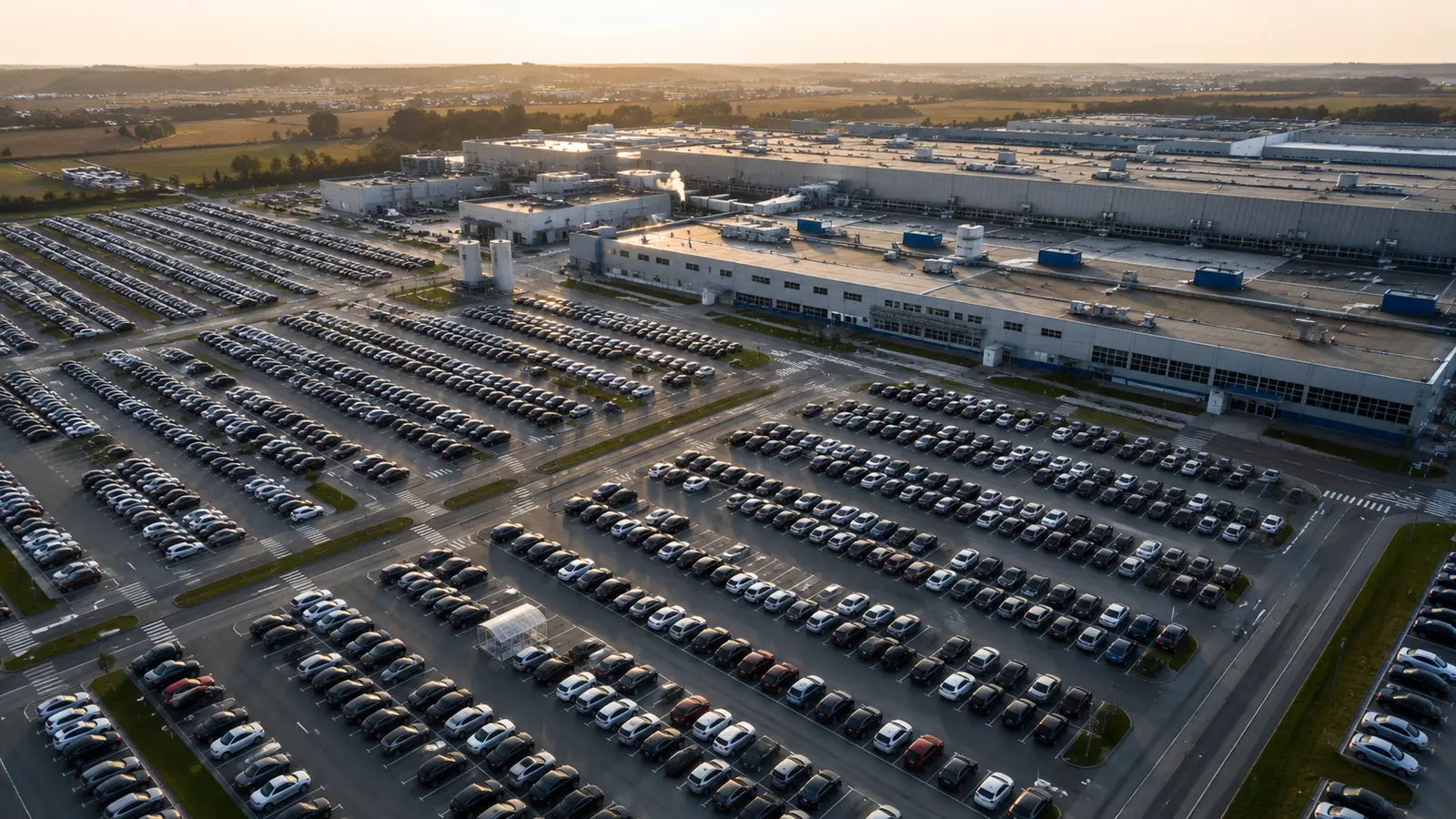
A factory recruited within a radius of a dozen kilometers or so.
A warehouse hired residents of the nearest towns.
A logistics center drew on local labor resources.
That model is starting to run out.
New investments appear faster than the number of available workers grows.
In practice, this means searching for candidates:
- 20 km from the plant,
- 30 km from the plant,
- 50 km from the plant,
- and often even further.
That changes everything.
Because as distance grows, so does the number of people who could theoretically work, but practically can't get to the workplace every day.
The labor market is starting to look like a logistics problem
For years, companies have measured:
- cost of hire,
- turnover,
- absence,
- time to recruit,
- cost per hire.
Far less often, they measure something else.
Employee accessibility relative to plant location.
And yet for a production or warehouse worker, the daily commute often means:
- an extra 1–2 hours a day,
- several hundred zlotys a month on fuel,
- no public transport for shift work,
- the need to own a car.
This is no longer an HR problem.
It's an operational problem.
58 thousand users show that employees have already found the answer
At the same time, the inOneCar community has crossed 58,000 users, growing by more than 20% year over year.
An interesting observation.
The biggest activity does not appear in the dense centers of the largest cities.
Most often, it's around:
- production plants,
- warehouses,
- logistics centers,
- special economic zones.
In other words: where the commute problem hits the labor market hardest.
Employees are starting to solve the transport availability problem on their own.
The cost of an unfilled vacancy can be higher than the cost of fixing the commute
When a position stays vacant, the company carries costs far greater than recruitment itself.
These include:
- overtime,
- team overload,
- lower productivity,
- higher turnover,
- operational delays.
In manufacturing and logistics, even small staffing gaps can affect the delivery of operational plans.
That's why more and more organizations are starting to look at employee mobility not as an administrative cost, but as something that expands access to the labor market.
Hays points to an interesting trend
Asked about the most important non-financial factors helping to attract candidates, employers pointed to:
- work model – 50%
- interesting projects – 43%
- employment stability – 42%
- development opportunities – 28%
- work-life balance – 27%.
They share one common denominator.
Quality of life.
And one of its most underestimated elements remains the daily commute to work.
A new KPI may be emerging
In recent years, companies have learned to measure:
- retention,
- absence,
- engagement,
- cost of hire.
In the years ahead, one more indicator may prove just as important:
real employee accessibility to the workplace.
Because if two employers offer similar pay, similar benefits and similar development opportunities, the edge can go to the one that is simply easier to reach.
Conclusions
The global shared mobility market is heading toward a value measured in hundreds of billions of dollars.
Polish companies continue to recruit intensively.
At the same time, they increasingly struggle with limited candidate availability.
So it's possible that in the coming years one of the most important boardroom questions will not be:
"How do we find more candidates?"
But:
"How do we make sure more candidates can actually reach us?"
Sources
- Hays Poland – Salary Report 2026
- McKinsey & Company – The Future of Mobility
- McKinsey – Shared Mobility Outlook 2030
- inOneCar internal data, June 2026